
Summers in Wisconsin are not exactly ideal conditions for metal detecting. It's hot. It's humid. And the buzz you're hearing isn't your headphones, it's the mosquitos. But this year I was bound and determined to keep swinging, so I bit the bullet and bought a water scoop. I live in Lake Country after all. Drive five minutes in any direction and you'll hit a lake. It was long overdue.
One afternoon I decided on a whim to test out a river that goes right through town. I hadn’t done any research but knew there was an old road that crossed the river where I had easy access. “Worth a shot!” I tossed my gear in the truck and took off. Right past the bridge where the old road crossed the river, I parked my truck and jumped out. Armed with my detector and handy new scoop, I scaled down the steep dirt hill next to the bridge and jumped the last 3 feet into the water. The river was about knee deep and had a firm rocky bottom. After the first 15 minutes I was feeling pretty discouraged about this river. I was mostly finding clad coins and junk near where I entered. Probably from local kayakers and fishermen. And if I walked too far up river the hard rocky bottom turned to mud which acted like sticky quicksand. Not ideal. But before I called it quits, I decided to walk under the bridge and check out the other side.
I made my way through the dark tunnel, spooking several carp eating lunch along the way, and popped out the other side. It only took about 15ft before I hit a decent high tone in the middle of the river. I plunged the scoop into the riverbed and pulled up a wheat cent! Excited that I was finally near old coins, I quickly logged my location (as I always do when I find old stuff). Eager to see if there was more, I put my detector back in the water. Another high tone! Again I plunged the scoop down. This time when the scoop came up through the water I was looking carefully through the rock and sand to find the penny. But I didn’t see a penny. I saw a dozen of them!
As I was picking the coins out of the scoop basket I was trying to figure out what was happening. “Was this a coin spill?” “Why so many wheat cents?” “There must be silver in here somewhere” “Why right in the middle of the river?”After I secured the coins into my finds bag I put the detector back in the water. I wanted to hear if there were any remaining stragglers. What I heard will stick with me forever. A symphony of beeps erupted into my headphones as I waved the coil across the riverbed. The noise would be akin to waving your detector over large pieces of tin or aluminum at an old homesite. But this was not tin or aluminum.
This was a hoard of coins.
For the next 4 hours I was LOCKED IN. Scoop after scoop after scoop coming up FULL of coins. I’m not talking 2-3 coins in each basket. Literally there were 12-24 every. single. time. The reason it took me 4 hours was because I had to painstakingly sift through the rock and sand to grab them one by one.
It started out primarily being wheat cents, but after a few scoops I started to see coins I’ve never seen before in my life. Canadian coins, French coins, Chinese coins, you name it - I was finding it. At first I would try and clean the interesting coins off to get a better look. But I was finding so many of them I had to just start chucking them in my bag to save time.My finds bag became the next hurdle in the treasure extraction. I have a modest finds pouch with a capacity of around 100 coins. Filling it had never once crossed my mind as a problem, until I packed it completely full two hours in. Once I zippered it shut to prevent any from spilling back into the water, I chucked the rest of the coins into my mesh trash bag.
"A symphony of beeps erupted into my headphones. This was not tin or aluminum. This was a hoard of coins."
Finally, after 4 hours, the beeps had come to a halt. What seemed like a bottomless pit of coins did in fact have an end. It was time to drag myself, and my pockets full of loot, out of the river and back home. When I got back, it took days to go through all the coins. In fact I’m still going through them. But I could not believe the treasures I had lying in front of me.
First, there were 12 silver coins. To put that in perspective, I’ve gone a full YEAR without finding 12 silver coins. The biggest of which was a stunning 1940 Canadian 50 cent coin. On it, an ornate shield on the reverse with a lion and horse on either side and a crown over the top.
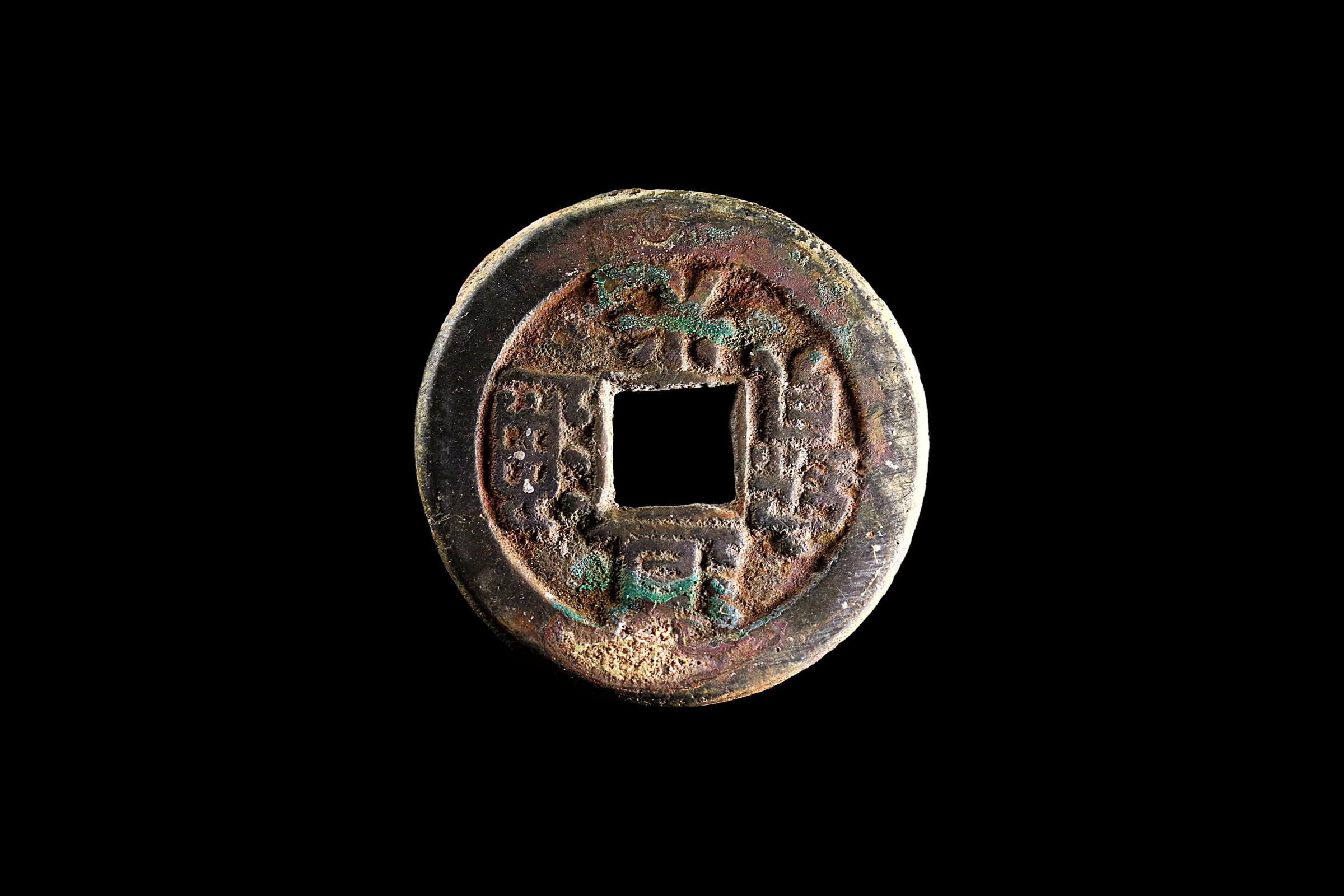
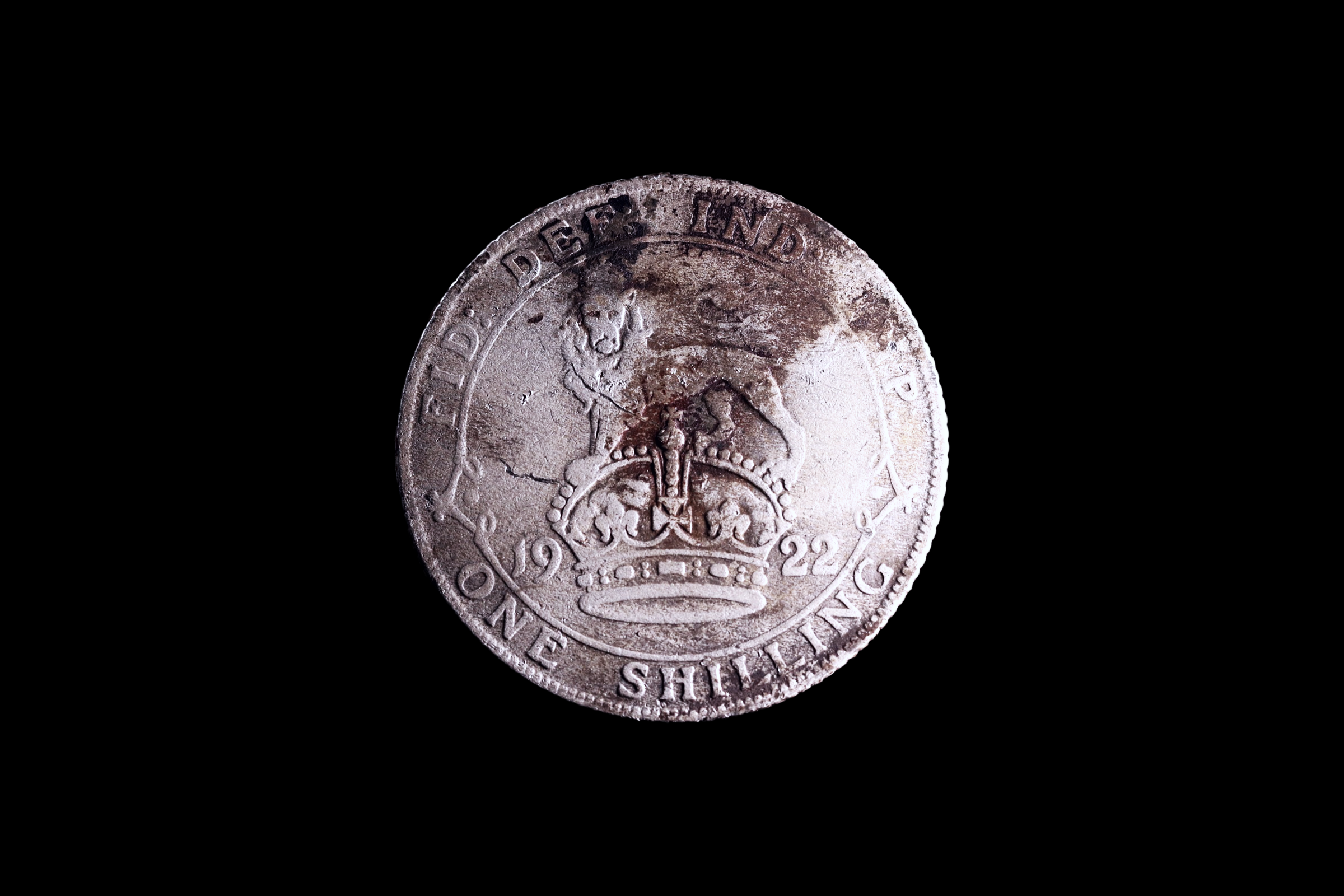
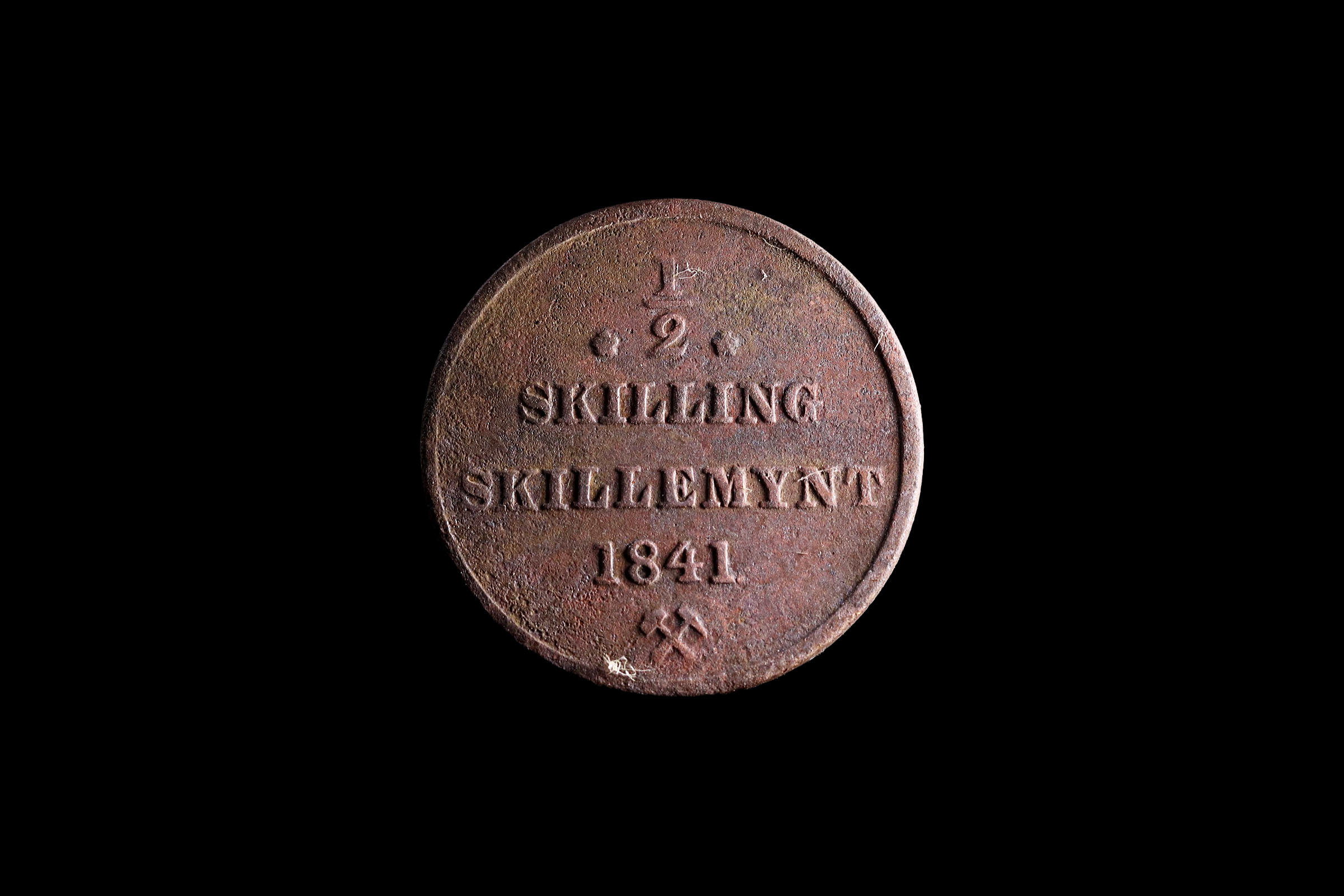
Then there were 65 foreign coins. All from ~1840-1940 and with very few duplicates. Coins spanned several countries - Canada, France, Denmark, Norway, Russia, Cuba, Mexico, China, Japan, Great Britain, Germany, etc. Someone had clearly collected these deliberately. They didn't end up together by accident. So how did a curated collection of 19th and early 20th century international coins end up at the bottom of a river in small-town Wisconsin?
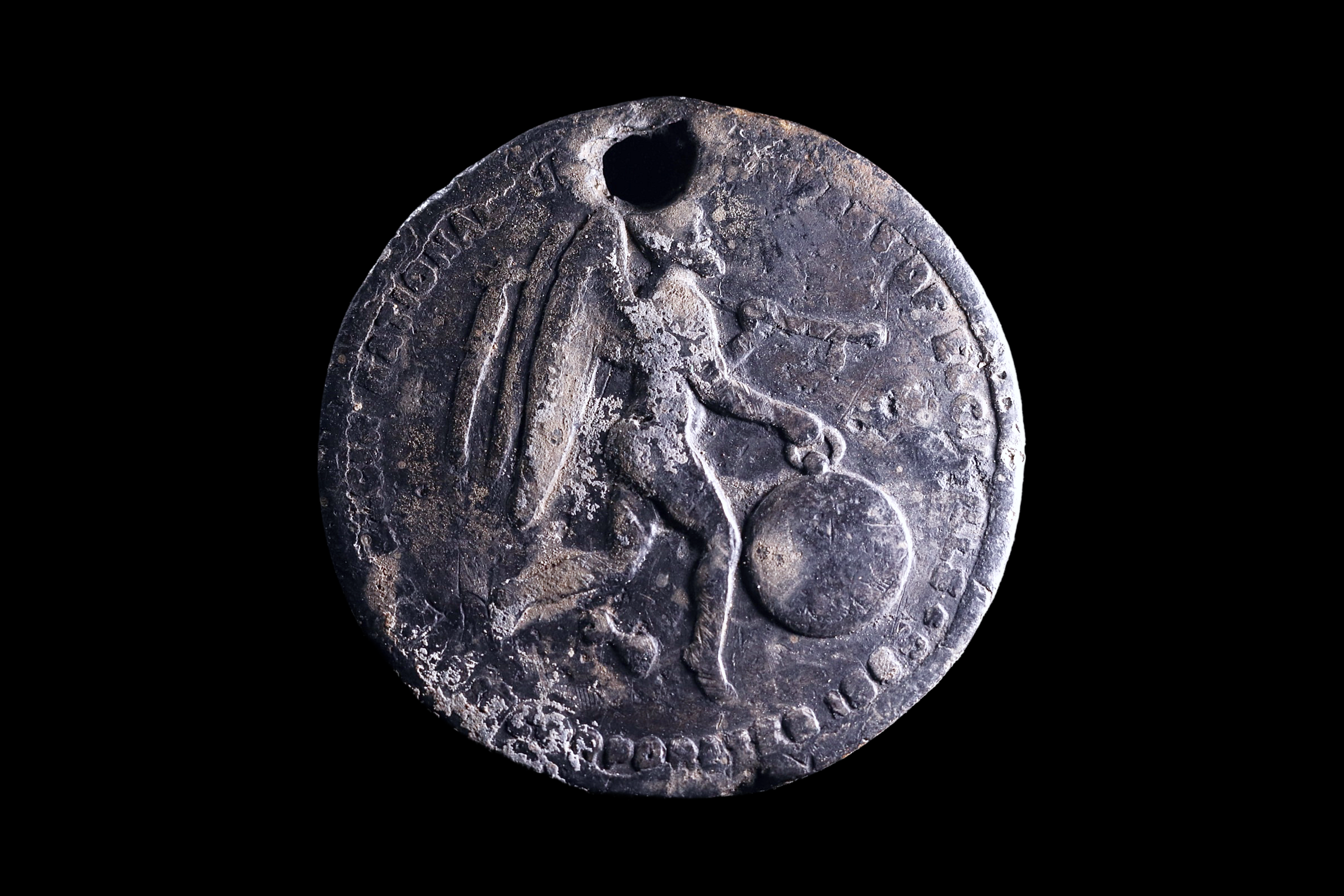
On top of those, there were also 13 tokens. Mostly a combination of advertising fobs and good luck charms. One token that stood out was large and black with a depiction of a man, with wings, carrying a pocket watch the size of his torso. When I researched this, I came across a story about how an archeologist actually found this same token at a burial mound excavation site and they immediately classified it as a roman coin…only to later realize it was a 19th century advertising token. oops.
The largest item I uncovered was a bronze sports medal. The size of it just about covers the palm of my hand. On the front was a man, in uncomfortably tight shorts, getting ready to hurl a large ball - presumably for the shot put. Since I didn’t find any markings on it, I’ve concluded that this was from the first olympic games.
So how did all of this end up here? That question has been rattling around in my head ever since I climbed out of that river. Someone deliberately collected these coins. They sought them out, traded for them, held onto them. And then at some point, for some reason, they ended up on the bottom of a river in small town Wisconsin. I have my theories but the truth is I will probably never know. But regardless of how it got there, that afternoon alone in the river, standing knee deep in the current, scoop full of coins - that’s a feeling I’ll never forget.
The world isn't out of secrets. They're just underwater. Sitting at the bottom of a river in a town you've driven through a hundred times, waiting for someone stubborn enough to go look.


.png)